Post 1 · Slide 1 of 7
AI can do the heavy drafting.
The final call stays with the person accountable for it.
See this post on Instagram
Slide 2
Drafting is work I can delegate.
Accountability isn't.
Slide 3
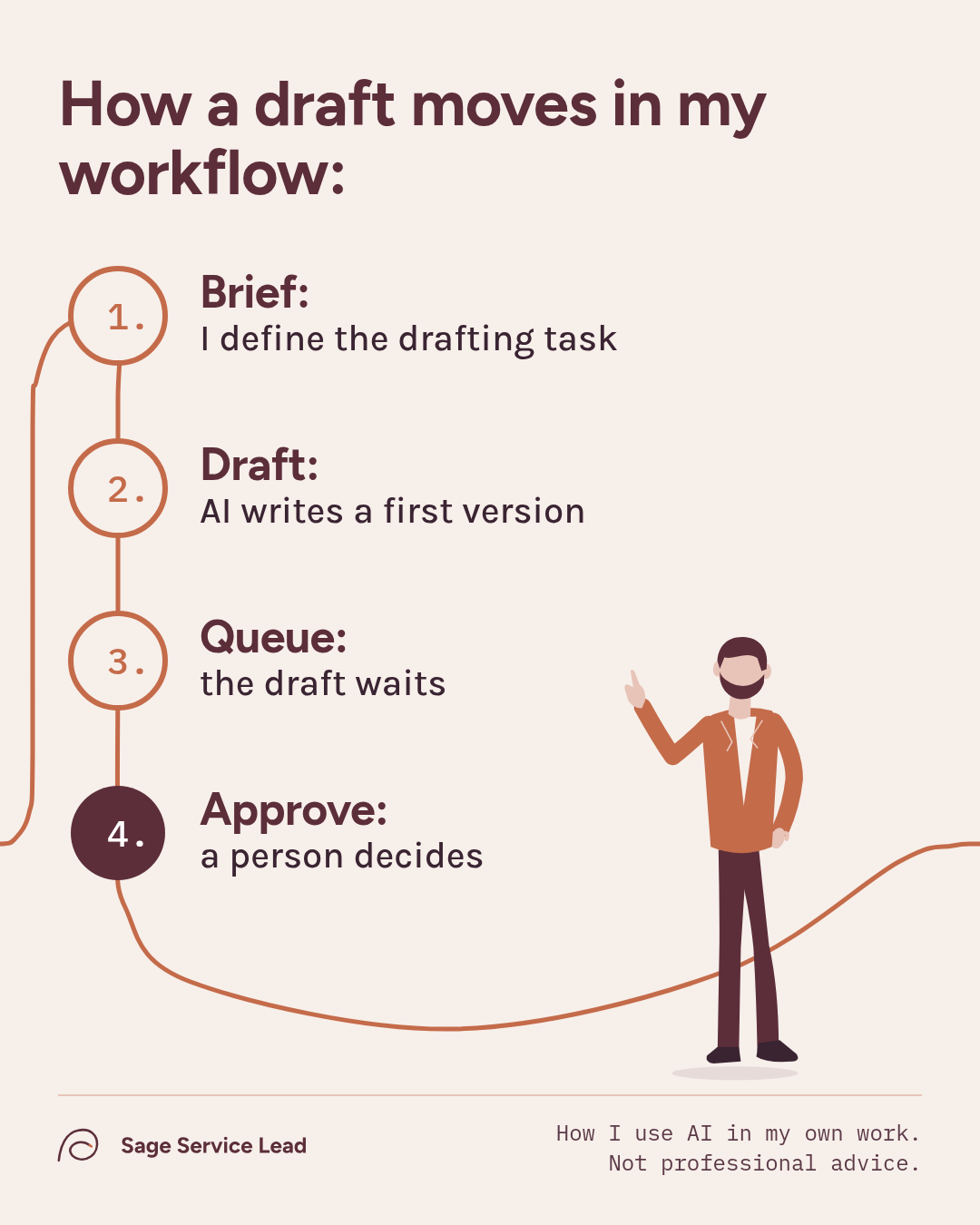
How a draft moves in my workflow:
- 1. Brief: I define the drafting task
- 2. Draft: AI writes a first version
- 3. Queue: the draft waits
- 4. Approve: a person decides
Slide 4
A polished draft is still a draft.
Looking finished isn't the same as being decided.
Slide 5
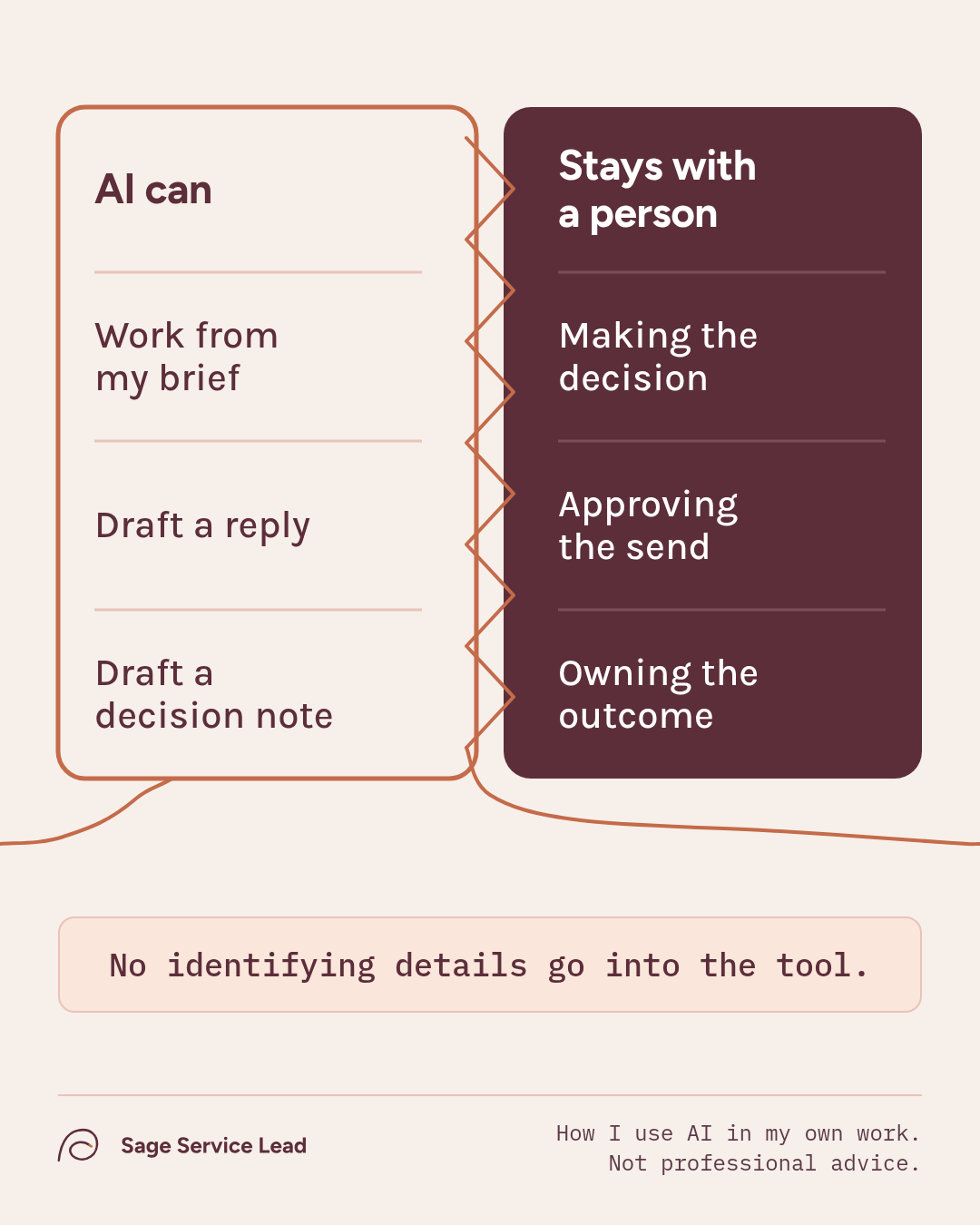
| AI can | Stays with a person |
|---|
| Work from my brief | Making the decision |
| Draft a reply | Approving the send |
| Draft a decision note | Owning the outcome |
No identifying details go into the tool.
Slide 6
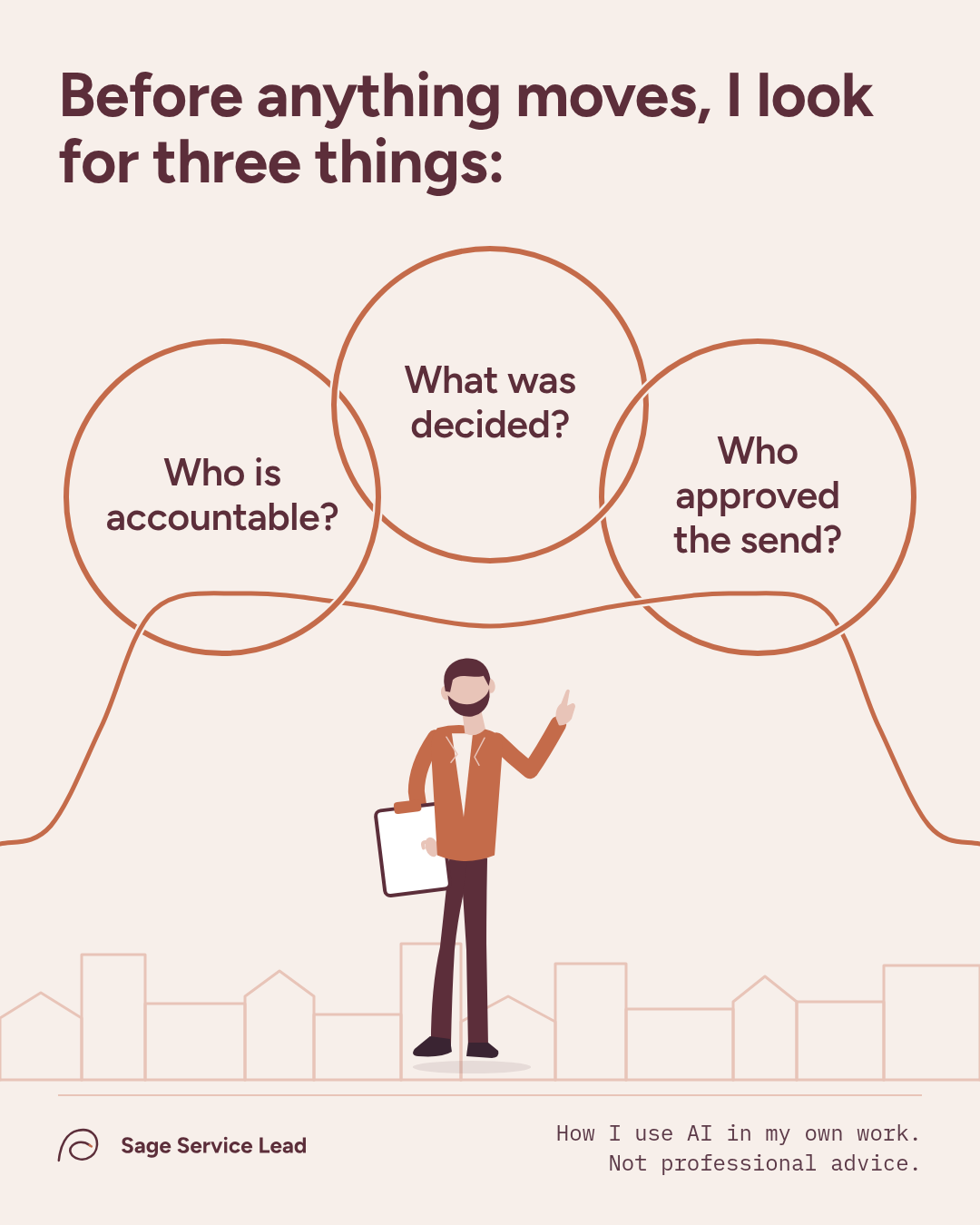
Before anything moves, I look for three things:
- Who is accountable?
- What was decided?
- Who approved the send?
Slide 7
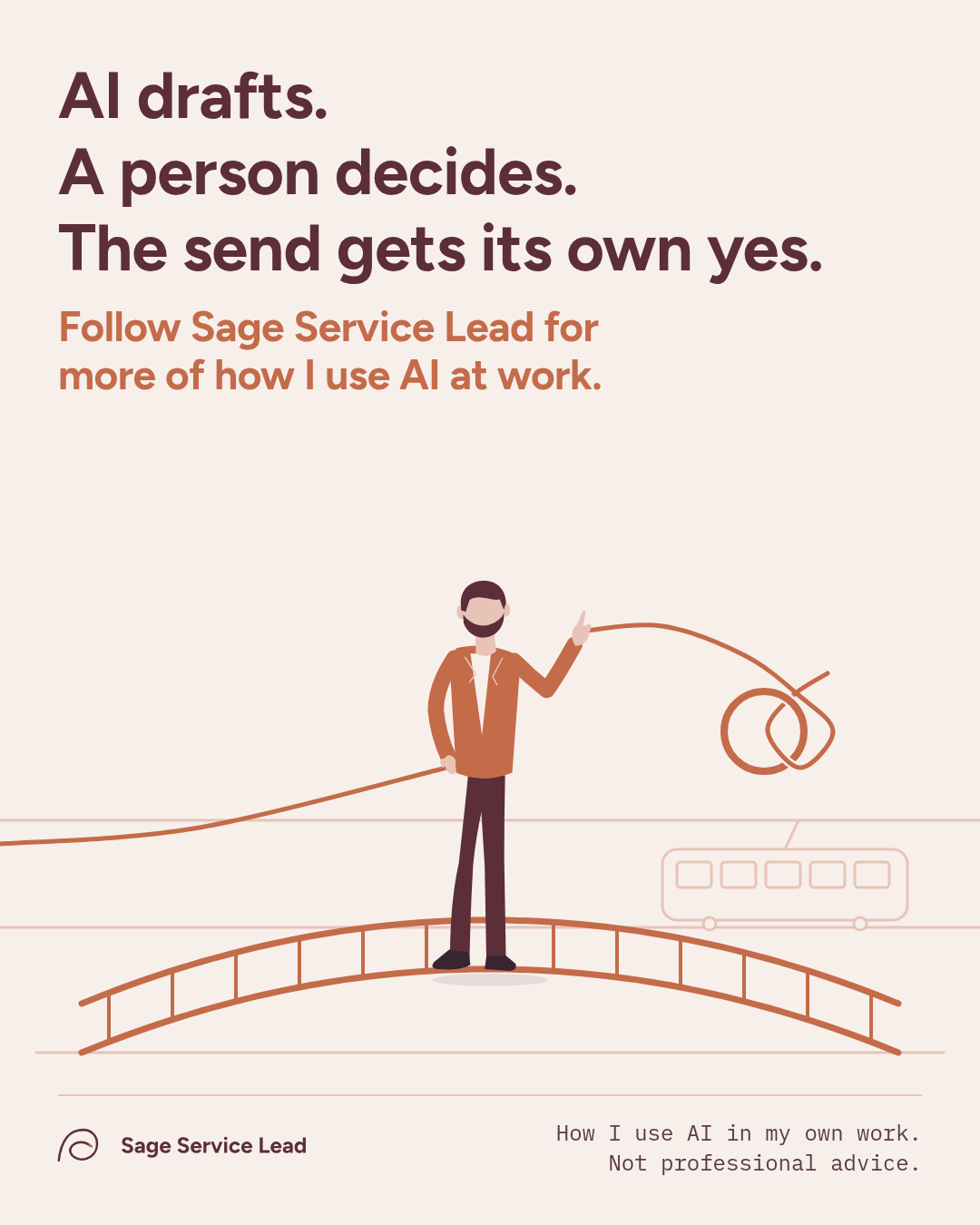
AI drafts.
A person decides.
The send gets its own yes.
Follow Sage Service Lead for more of how I use AI at work.
Caption
AI does a lot of the heavy drafting in my work. The decision is a different job, and I keep the two apart.
Here's how it runs. I give AI a bounded brief, then it writes a first version. That draft waits in a queue until the person accountable reads it and decides. When the call is mine, I make it. When it belongs to someone else, it goes to them.
I keep identifying details out of the tool, too.
This isn't a rulebook. It's simply how I've set up my own workflow, and it lets me stay curious about AI without losing track of who owns what.
Which part of your week would you happily hand over for a first draft?
How I use AI in my own work. Not professional advice.